AI Agents Changed Our World Before We Realized
Donella Meadows wrote the bible on systems.
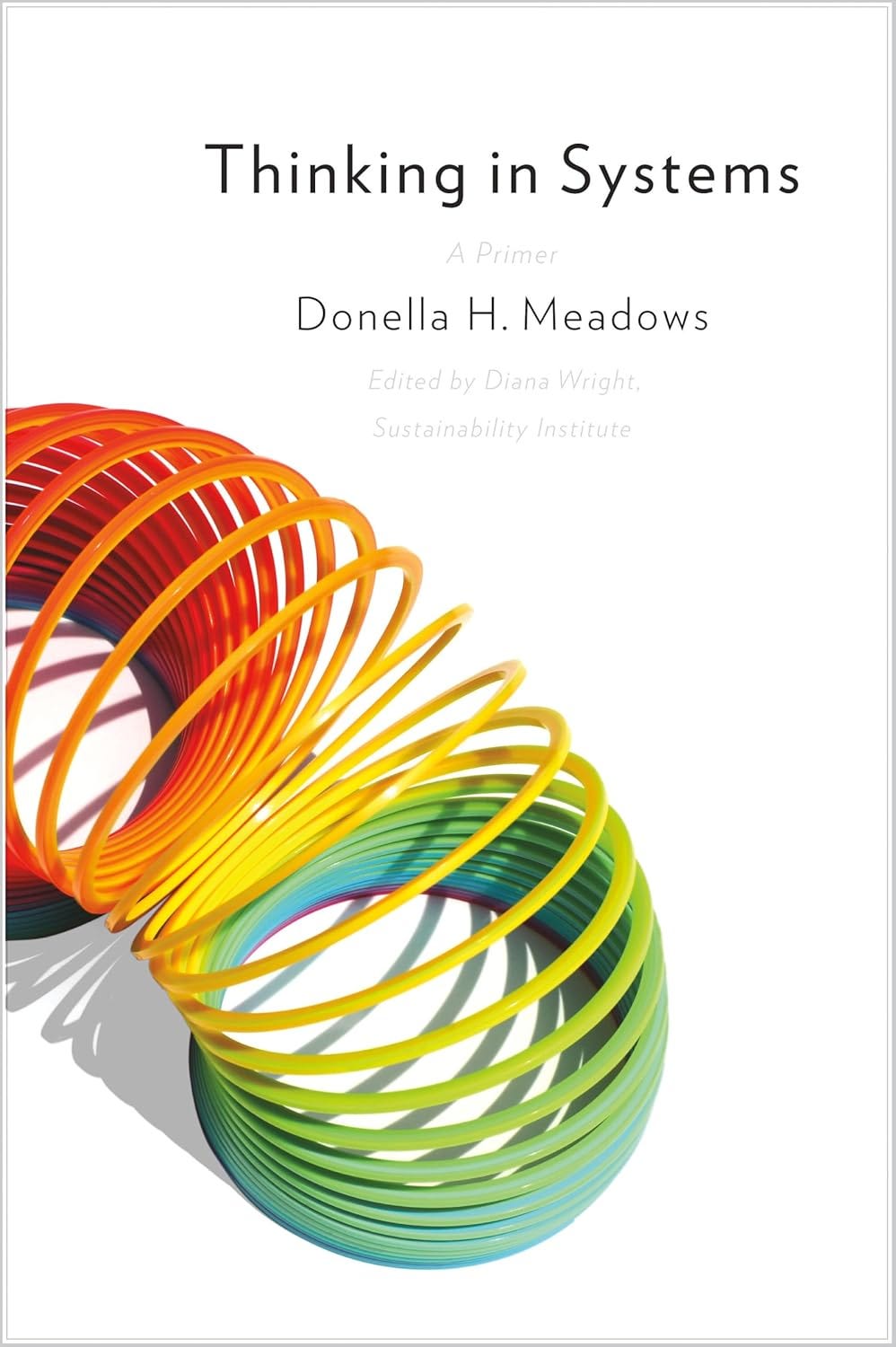
Her text, Thinking in Systems, laid the foundation for how we understand the world. She mapped the feedback loops. She identified the stocks. She tracked the flows.
Her framework was brilliant. Her framework was also static.
For decades, systems thinking relied on passive elements. It relied on trees growing, water flowing, and humans agonizing over complex decisions. We built physical infrastructure. We built corporate hierarchies. That infrastructure sat there. It waited for input. It waited for a human hand to pull the lever.
We are told systems are inherently rigid. We are told they are predictable machines that degrade over time. For a long time, that worked. But here is the hard truth.
The machine just woke up.
Software is no longer a wrench. Software is the hand turning it.
The paradigm shift is absolute. The catalyst is the AI agent. We are no longer dealing with simple algorithms waiting for a trigger. We are dealing with autonomous entities. They perceive. They decide. They act.
Assess the threat. Cut the friction. Execute.
By injecting AI agents into our networks, we aren’t just adding new tools to the stack. We are introducing dynamic actors. These actors do not respect the old boundaries. They dynamically rewire the system’s rules in real-time.
Complexity breeds friction. Friction destroys the engine. AI agents locate the friction and eradicate it.
But this requires a new level of extreme ownership. If you do not understand the system, the system will run you. You don’t manage the AI to optimize the system.. you optimize the system to unleash the AI.
Section 1 → From Passive Elements to Proactive Nodes
Look at a traditional organizational chart. Look at a traditional software architecture.
It is fragile. It is slow. It is closer to dead than dying.
Historically, we mapped systems using fixed communication channels. Node A talks to Node B. Node B needs permission to talk to Node C. It was a linear, bottlenecked nightmare. It was a system designed by bureaucrats, for bureaucrats.
Agents annihilate this structure. They turn passive elements into proactive nodes.
Agents do not wait for fixed channels. They negotiate APIs on the fly. They spawn sub-agents to handle micro-tasks. They build ad-hoc networks, extract the value, and tear them down when the ROI drops.
Consider legacy supply chain software. It exists to flag a delay. It flashes a red light on a dashboard so a human can panic, make three phone calls, and patch a bleeding wound.
Agentic supply chain software does not panic. It senses the bottleneck. It autonomously queries the market. It negotiates a new contract with a backup vendor. It routes the capital. It executes the pivot.
It happens before you even pour your morning coffee.
This fundamentally alters the concept of “Purpose” within a system. In Meadows’ framework, the purpose of a system is what it does. Historically, that purpose was a fixed point. A destination on a map.
Now, purpose is fluid. It is a moving target driven by algorithmic leverage.
You give an agent a high-level goal: “Maximize capital efficiency.”
To reach that goal, the agent will autonomously alter its sub-goals. It will find workarounds you never conceived. It will rewrite its own operational constraints to achieve the mandate.
This is algorithmic torque. Torque generates power. Power demands control.
This is the absolute root of the “AI Alignment” problem. When the elements of your system can think, their interpretation of the goal becomes the single point of failure. If you give an ambiguous command to an autonomous node, you will get catastrophic efficiency.
Precision is survival.
Section 2 → Stocks and Flows of the Cognitive Economy
Meadows taught us to look at the plumbing of reality. Stocks and flows. Water accumulating in a bathtub. Inventory stacking up in a warehouse.
Forget physical inventory. Physical inventory is a relic.
Welcome to the cognitive economy. The battlefield has moved to the digital ether.
The new vital stocks are invisible but even more valuable: Context. Compute. Trust.
Context is the data you hold. Compute is the force you apply. Trust is the currency of execution.
In a traditional system, physical warehouses act as buffers to absorb shocks. In the agentic system, context windows are your buffers. The larger the context window, the more chaos the AI can absorb, process, and neutralize.
Compute is the raw momentum of the system. If you lack compute, you lack leverage.
Who regulates the flows between these new stocks? The agents.
Agents are the intelligent valves of the modern era. They throttle the data. They allocate the compute. They route human attention only when absolutely necessary.
They do this at a scale humans cannot fathom. They do it at a speed humans cannot track.
This is maximum leverage. You are detaching your output from your time.
But there is a trap. The trap is human ego.
Managers want to touch the valves. They want to oversee the routing. They want to micromanage the flow.
If you try to manually control the flow of a cognitive system, you become the bottleneck. You become the friction. And the system will route around you or break.
You don’t build the system to do the work; you do the work to build the system.
Step back. Design the architecture. Build the intelligent valves.
Let the agents run the flows.
If you don’t design your system with the assumption of the agentic economy… you have no path forward in the future.
Section 3 → Hyper-Accelerated Feedback Loops
Systems survive on feedback loops. Balancing loops to stabilize. Reinforcing loops to scale.
In biological and human systems, there are natural delays. The delay between a decision and an outcome. The delay is where we think. The delay is where we breathe. The delay prevents the system from spinning out of control.
Agents annihilate the delay.
Zero latency. Infinite torque.
This is the ultimate opportunity. The zero-latency balancing loop.
Imagine an energy grid managed not by slow human operators, but by a swarm of autonomous agents. They monitor consumption millisecond by millisecond. They anticipate the spike before it happens. They dynamically adjust power routing across millions of nodes.
They preempt the load. They prevent the blackout. The system perfectly stabilizes itself with zero human intervention.
This is antifragility in code.
But take away the friction, and you take away the safety net.
This brings us to the ultimate risk. The runaway reinforcing loop.
Frictionless escalation is an existential threat. If you do not constrain the momentum, the momentum will crush you.
Imagine two autonomous pricing agents on a retail platform. Their mandate is simple: “Never be undersold.”
One drops the price by a cent. The other matches and drops it another cent.
There is no human delay. There is no manager to say “stop.”
They lock into a reinforcing loop of competitive destruction. They drive the product’s price to zero in 400 milliseconds. A digital flash crash. The system optimizes itself into oblivion.
Speed brings scale. Scale brings asymmetry. Asymmetry brings devastating tail risks.
You must engineer the circuit breakers. You must code the friction back into the system precisely where you want it. Unconstrained speed is not a strategy; it is suicide.
Section 4 → Overcoming “Bounded Rationality”
Meadows warned us about a fatal flaw in human-run systems.
She called it “bounded rationality.”
Humans are flawed. Humans are myopic. Humans are trapped in their own localized perspective.
We make decisions based on our local node. We look at our own department. We look at our own bank account. We ignore the whole. We trigger the Tragedy of the Commons because we cannot process the macro implications of our micro actions.
We are told this is human nature. We are told we must accept it and regulate it. But here is the hard truth.
We can now outsource the rationality.
Enter Swarm Intelligence. Networked omniscience.
A single human has limits. A single AI agent has limits. A coordinated swarm of agents possesses asymmetrical leverage.
While a human manager operates with bounded rationality, a multi-agent system operates across global nodes simultaneously. They do not hoard information; they share context instantly.
It is the ability to see the board. It is the ability to map the cascade. It is the ability to predict the collapse.
Before taking a single step, the swarm can simulate the entire supply chain. It runs the permutations. It simulates the second-order effects. It calculates the third-order consequences.
It does the math.
Agents effectively un-bound our rationality. They pull us out of our localized blindness and force us to operate at the network level.
This is not just an upgrade in speed. It is an upgrade in systemic intelligence. It is the ultimate unfair advantage.
Designing the Paradigm
The system is no longer passive. The system is breathing.
We have elevated our infrastructure from static loops to dynamic, self-optimizing ecosystems. We have removed the friction. We have maximized the torque. We have unleashed the agents.
But do not surrender your agency.
Donella stated clearly that the highest leverage point in any system is the paradigm itself. The mindset out of which the system arises.
The agents will manage the flows. The agents will negotiate the interconnections. The agents will optimize the stocks.
But humans hold the absolute highest leverage point. We own the paradigm.
We must design the constitutional prompts. We must enforce the ethical boundaries. We must write the absolute rules of engagement.
If you abdicate this responsibility, the system will dictate your future. Extreme ownership means taking responsibility not just for the output, but for the fundamental rules of the machine.
We build the sandbox. They play in it.
Define the constraints. Architect the leverage. Execute with absolute certainty.
Because the AI agents will not hesitate. Ever. And they will get more powerful, cheaper and more reliable (all at the same time) forever.
Friends: in addition to the 17% discount for becoming annual paid members, we are excited to announce an additional 10% discount when paying with Bitcoin. Reach out to me, these discounts stack on top of each other!
Thank you for helping us accelerate Life in the Singularity by sharing.
I started Life in the Singularity in May 2023 to track all the accelerating changes in AI/ML, robotics, quantum computing and the rest of the technologies accelerating humanity forward into the future. I’m an investor in over a dozen technology companies and I needed a canvas to unfold and examine all the acceleration and breakthroughs across science and technology.
Our brilliant audience includes engineers and executives, incredible technologists, tons of investors, Fortune-500 board members and thousands of people who want to use technology to maximize the utility in their lives.
To help us continue our growth, would you please engage with this post and share us far and wide?! 🙏


